
When is it time to change your guitar strings?
How often should you change your strings?
This can sometimes turn into quite the debate! The topic comes up far more often than you may think, so I’m here to allay the rumours, dispel the myths, and explain how to figure it out. Let’s not take too long about it though; here are the essential thoughts.

The Obvious
OK, let’s start with the obvious… If your guitar strings are starting to blacken, sound dull, require more tuning, are dented/pitted underneath, or just carrying a load of gunk, it's time to change them!

Regular Strings
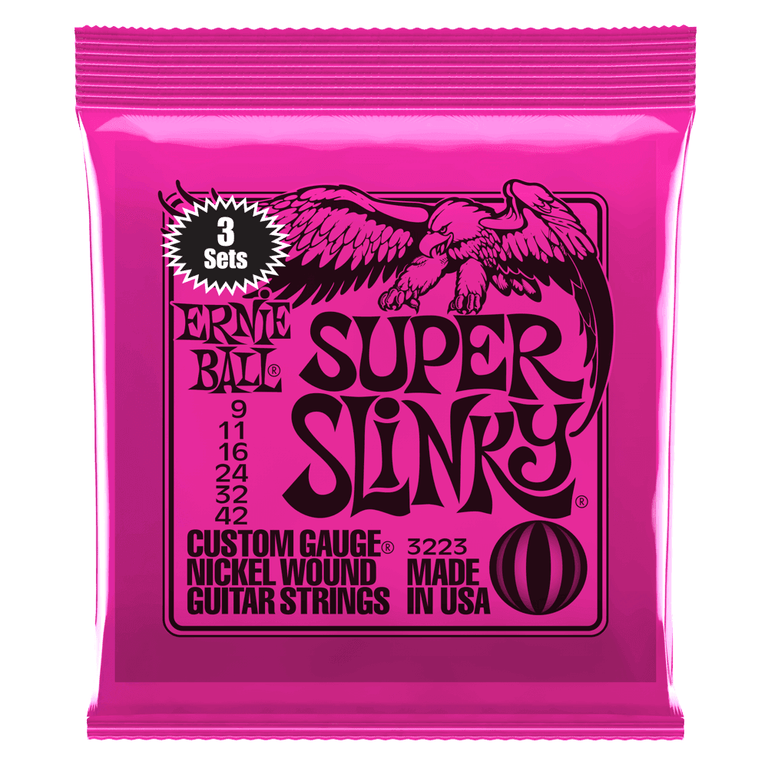
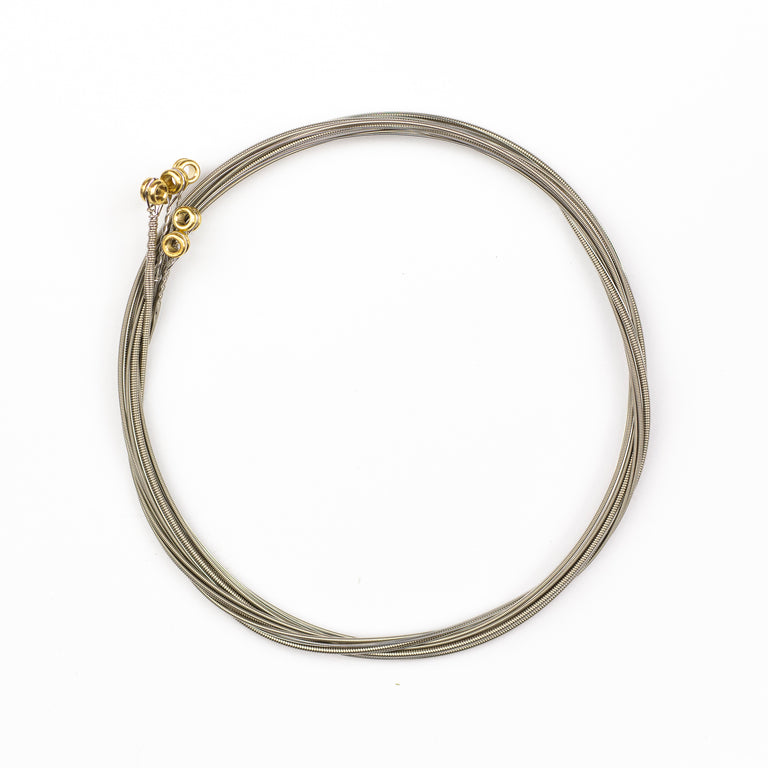
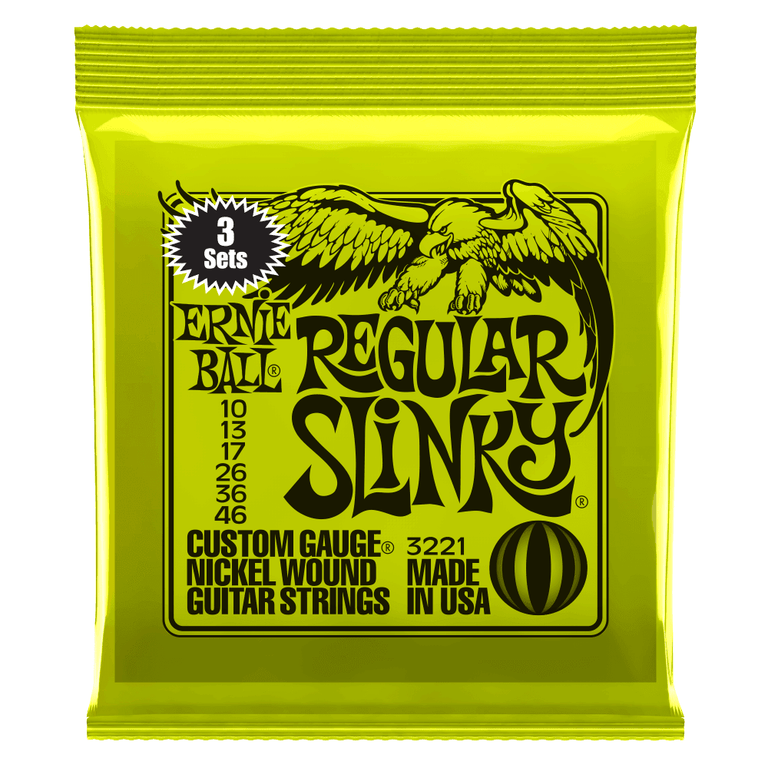
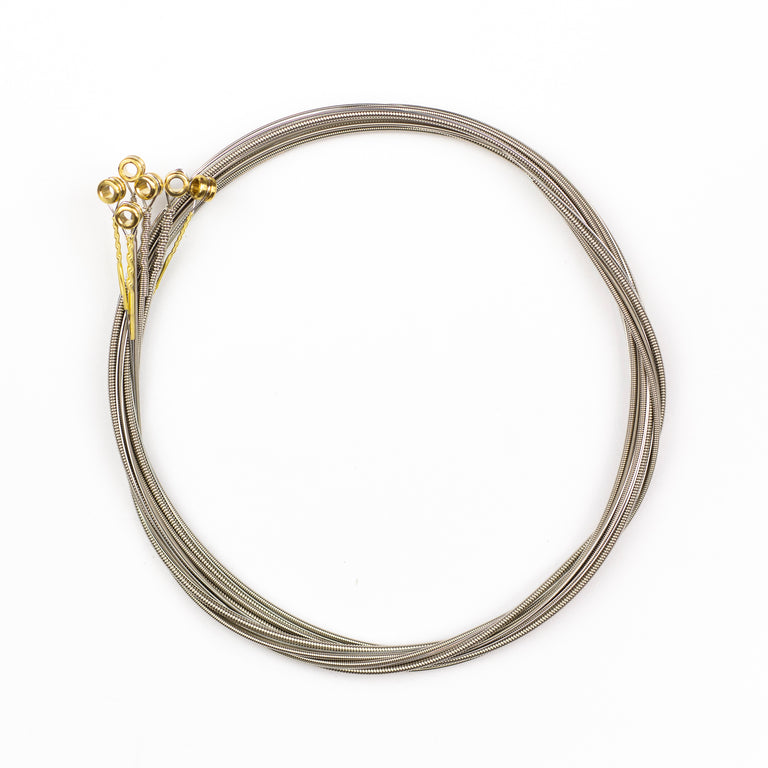
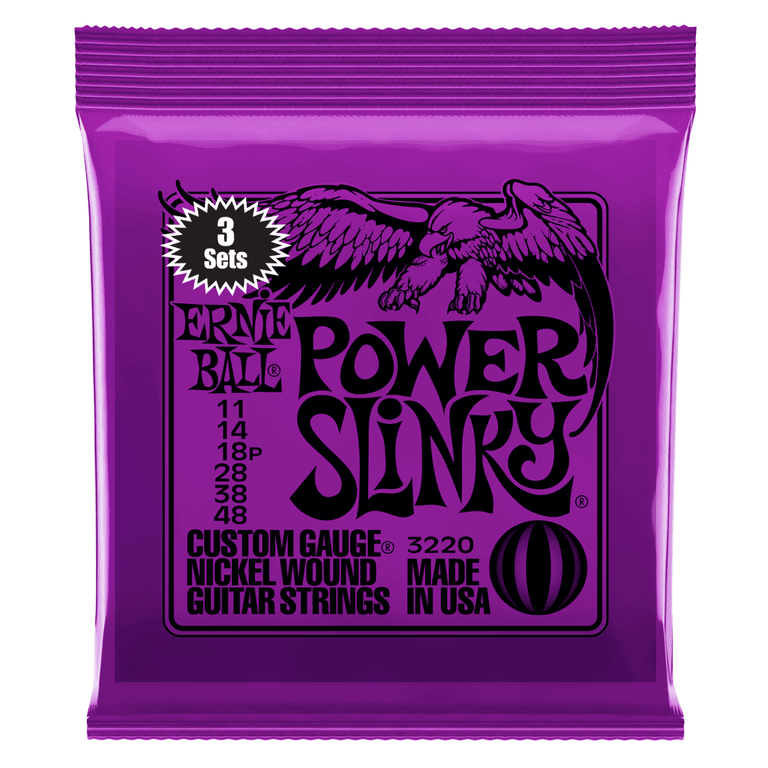
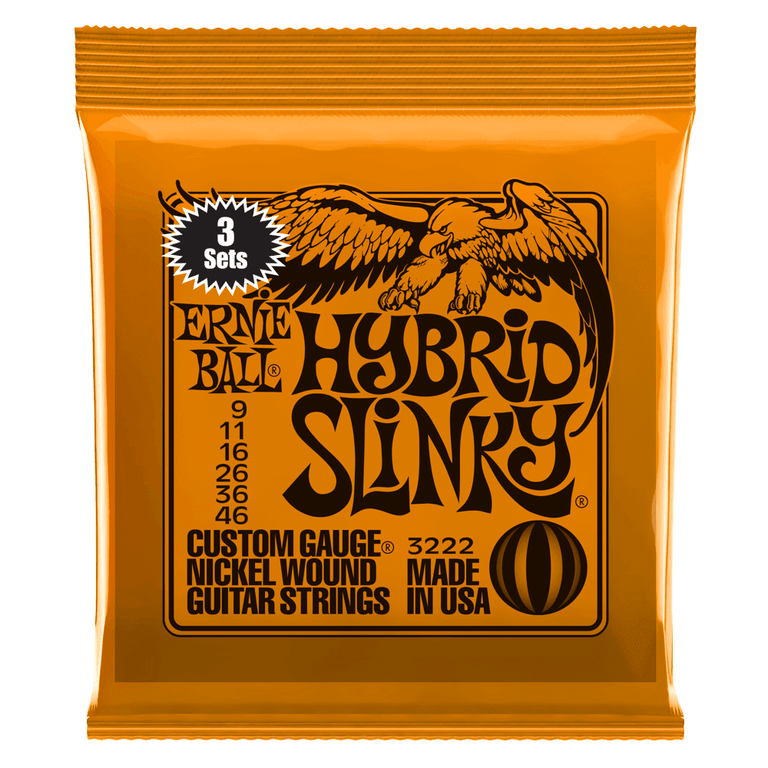
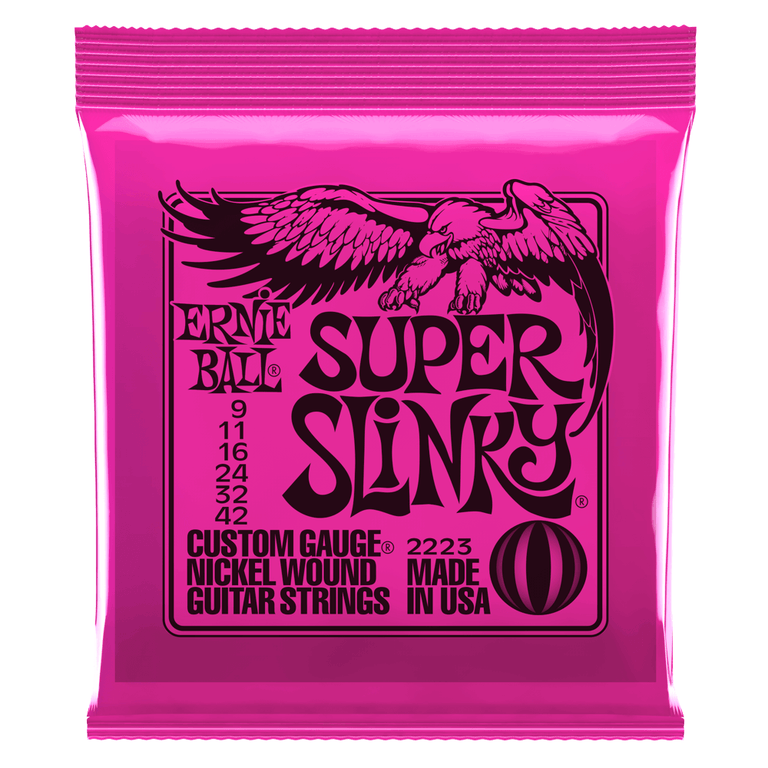
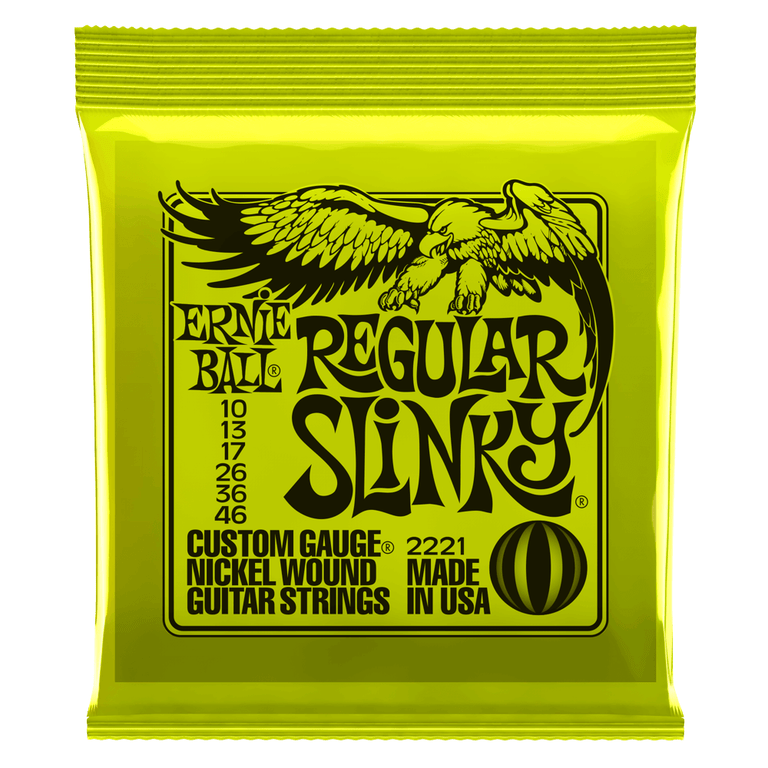
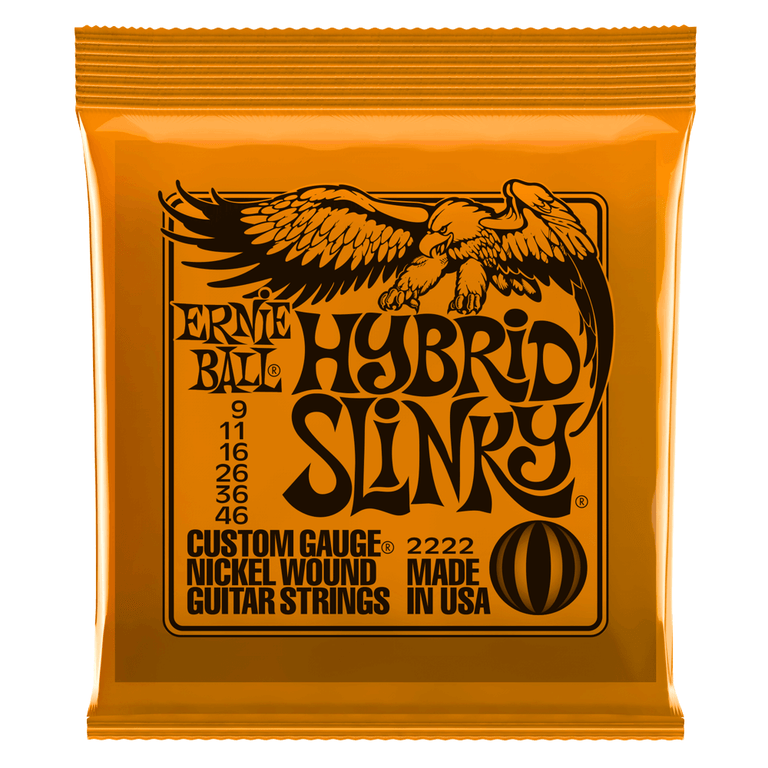
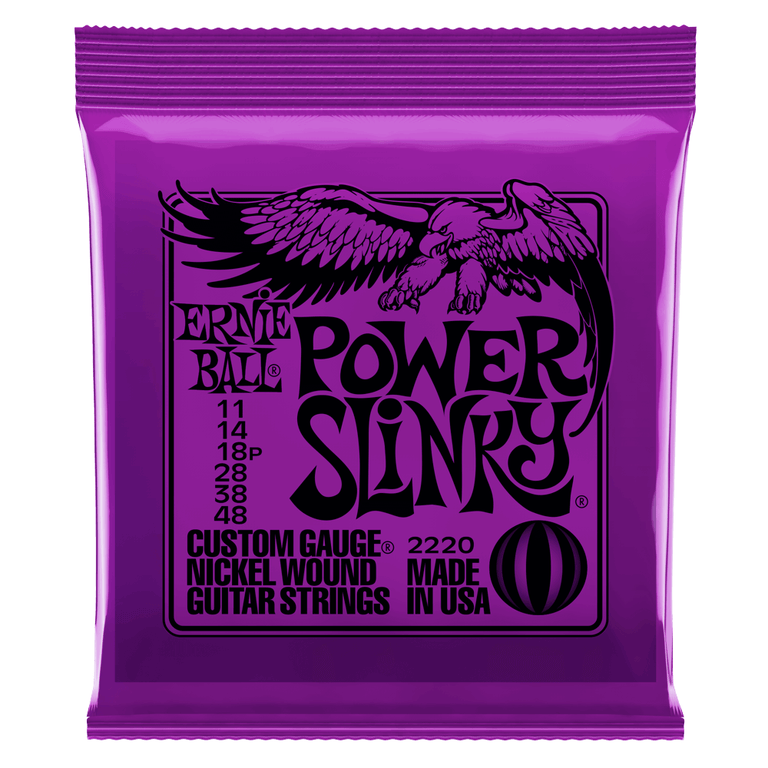
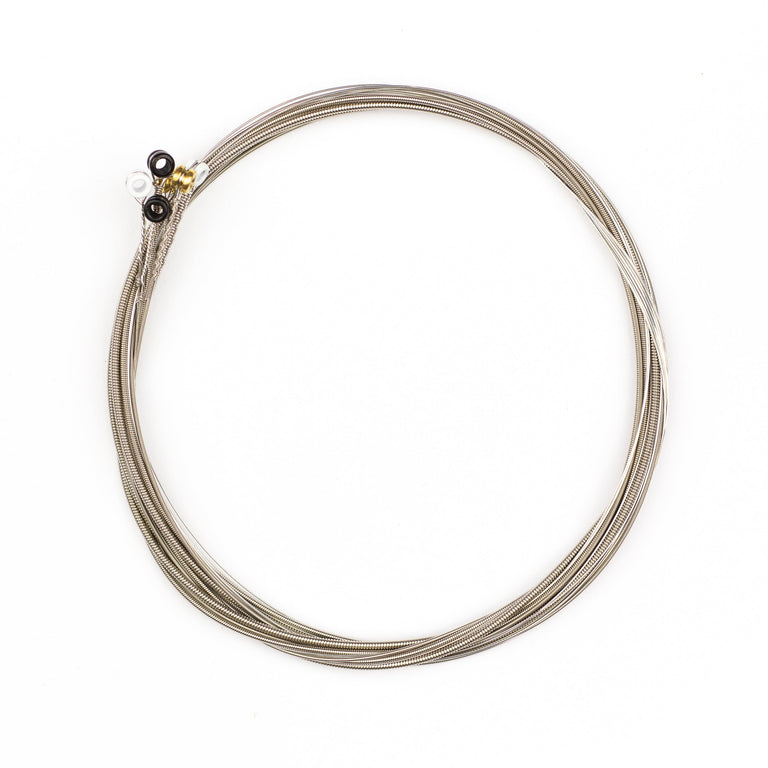
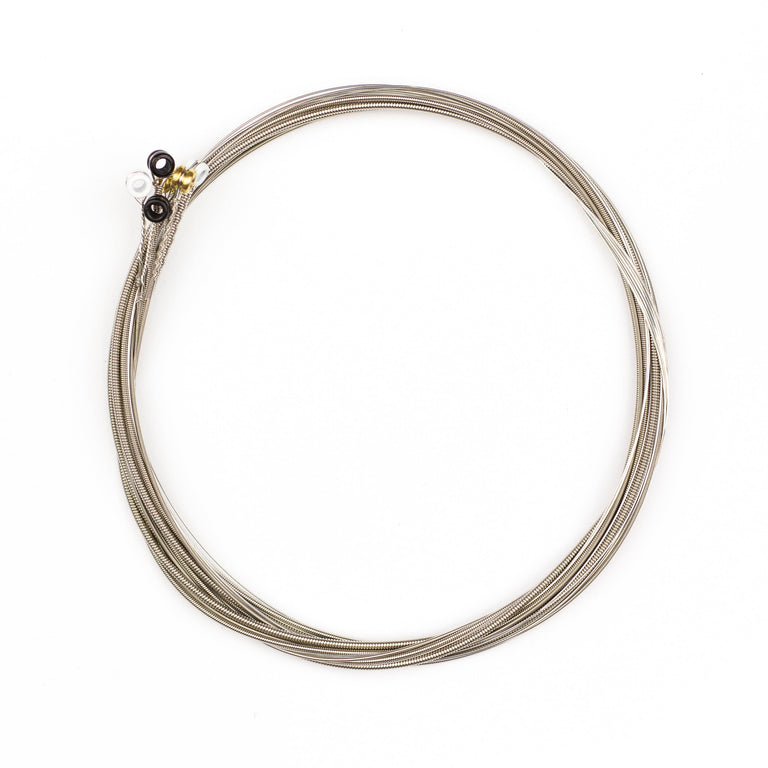
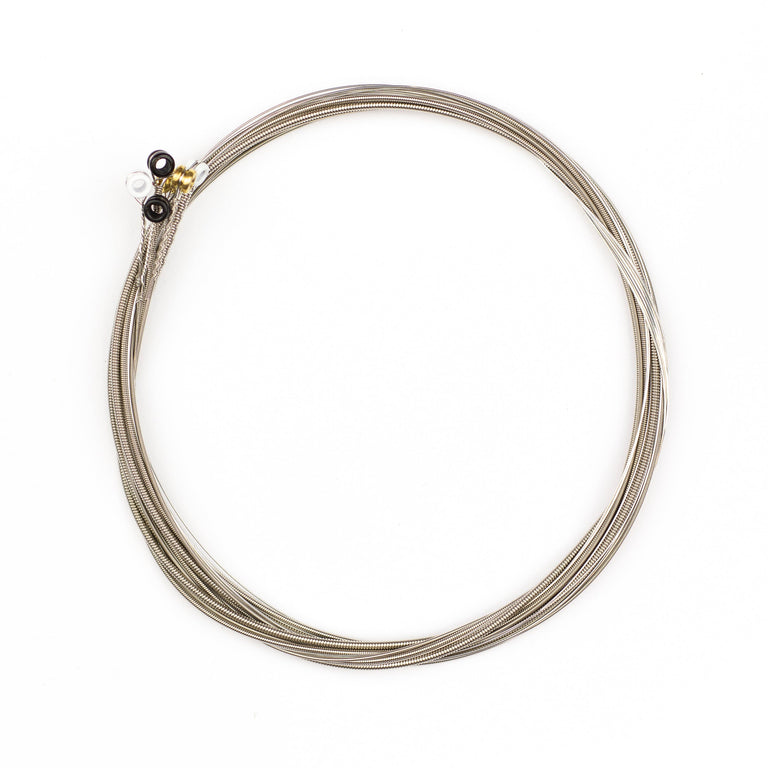
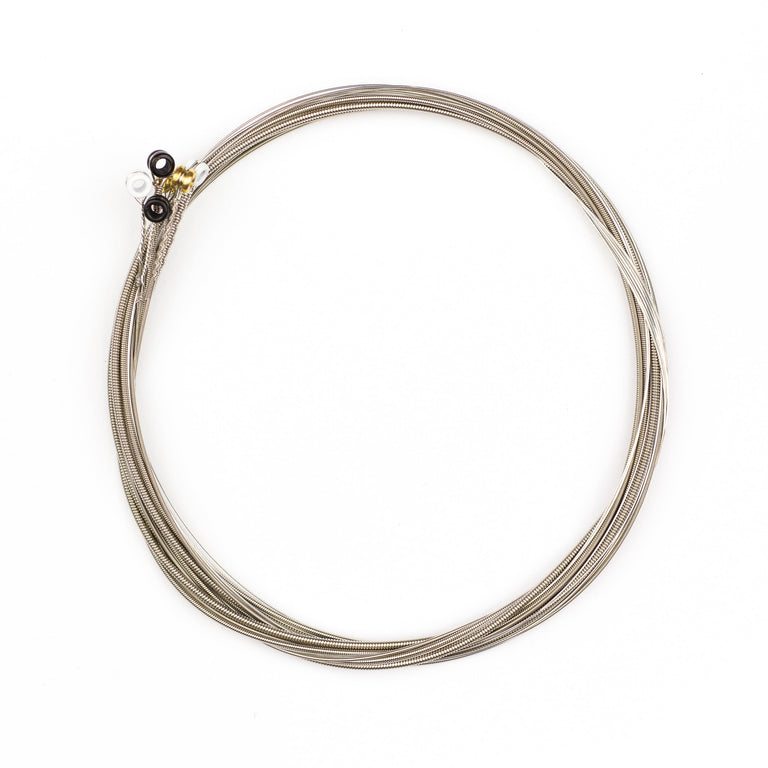
When I refer to regular guitar or bass strings, I’m talking about strings that have no coating or extended life treatment. This includes sets like Ernie Ball Slinky, D’Addario XL-Series, Jim Dunlop Performance+, DR Tite Fit. All of these standard sets have nickel-plated steel wrap wire, which is completely exposed to the elements. Inevitably, sweat, oil, and acid from playing will oxidise and corrode the strings, dulling the tone and affecting the tuning as the contaminants gradually permeate deeper between the windings. As little as an hour playing in the warmer months can be enough to significantly degrade the strings.
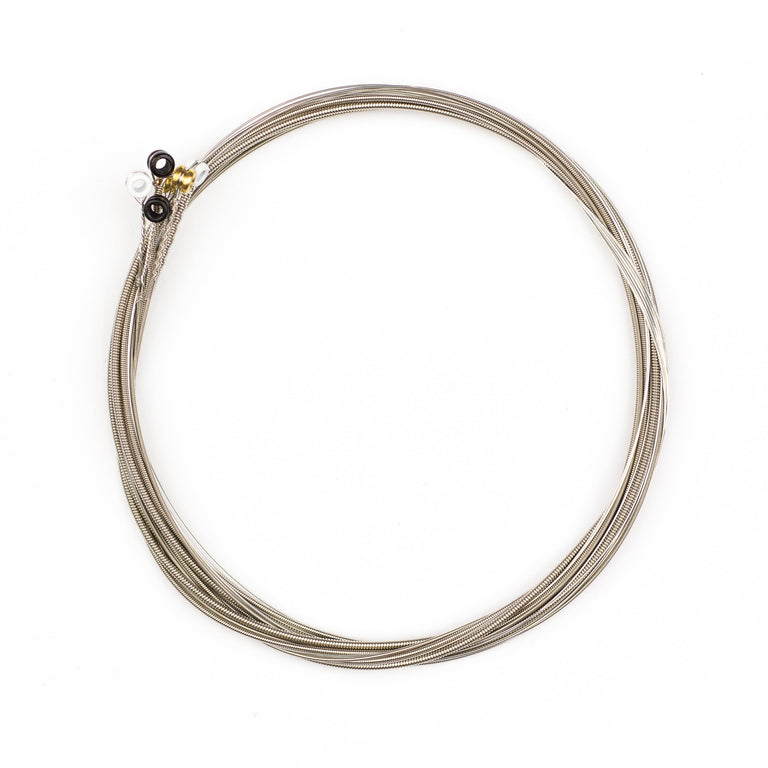
Using a regular set, on a regular basis, let’s say an hour per day, I’d suggest changing guitar strings every 2-3 weeks, and bass strings every 8-10 weeks.

Premium Strings
Although uncoated and untreated, certain premium sets have higher quality, smoother, reformulated wrap wire with less surface area at a microscopic level - Ernie Ball calls this ‘plasma-enhanced’. This means there are fewer areas where gunk can sit and start to deteriorate the strings. These will last a little longer than regular strings, but they’re still subject to the elements.
As above, premium strings such as D’Addario NYXL should be changed every 4-5 weeks for guitar, and 10-12 weeks for bass.

Coated Strings
Coated and treated strings will often last a lot longer - up to a year in some cases - but, honestly, that's just dirty. Full-film coatings such as Elixir Nanoweb, D’Addario XS, and DR Dragon Skin+ cover the entire string with protective barriers that stop contaminants reaching the wire. Treated strings tend to have hydrophobic qualities which reduce the amount of gunk that can sit on the string.
That being said, I believe the idea behind extended-life guitar strings is to preserve the tone-life of the strings for longer rather than simply keep them on for longer; they’ll sound fresh for longer. Yes, they can be changed less, but they will still need changing regularly.
Coated strings are great for guitars that are more often display pieces than players. If you have a guitar on the wall just for occasional strumming, a coating set is ideal. They’ll sound great every time you pick it up for a long time.
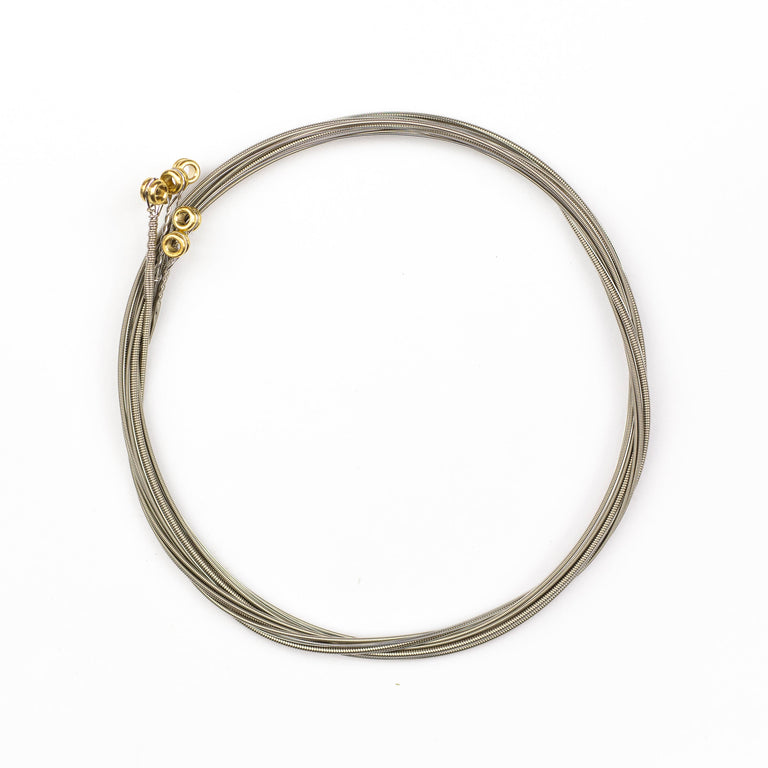
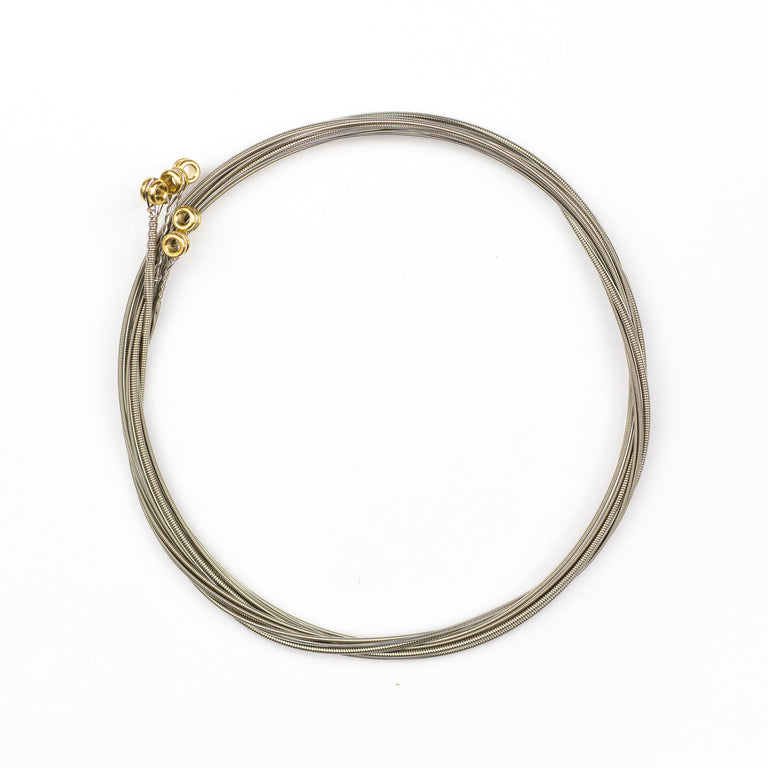
The two strings below are an Elixir 80/20 Bronze POLYWEB coated acoustic guitar string, and an Elixir nickel-plated steel NANOWEB coated electric guitar string. As Polyweb is the heaviest coating known to man in the range, it's the best for showing the coating.

Practise Hygiene
… not just skill. There are products to help extend string life, such as GHS Fast-Fret, Music Nomad STRING FUEL, and D’Addario XLR8. These are simple, cleaning fluid-impregnated pad-sponges that clean and freshen strings. The act of wiping away dirt will improve string life. It's also worth getting yourself a decent microfibre cloth just to keep wiping over your strings after playing.
Remember, you’re sweating into the strings every time you play; they need cleaning just as often as you’d wash your hands.

Final Thoughts
Some players have particularly acidic sweat which destroys strings, so they'll need changing more often. In the more humid summer months, a particularly sweaty rehearsal can turn fresh strings into rubber bands! However, to maintain good, fresh tone and hygiene, we suggest replacing your standard guitar strings every 2-3 weeks if you play regularly.
So I guess what I'm trying to say is, look for the signs: dull tone, black spots, rust, gunk, or poor tuning stability. And, if they've been on for a year, change them for everyone else's sake!
![D'Addario NYXL Nickel Wound 9-42 Electric Guitar Strings, Light [NYXL0942]](http://www.stringsdirect.co.uk/cdn/shop/products/NYXL0942_detail1_hi-res_768x768_crop_center.jpg?v=1689010645)
![D'Addario NYXL Nickel Wound 9-42 Electric Guitar Strings, Light [NYXL0942]](http://www.stringsdirect.co.uk/cdn/shop/files/D_Addario-NYXL-NPS-6-String-UPDATE_f030b748-897f-43a2-b86b-bee52f0f8c61_768x768.png?v=1705327898)
![D'Addario NYXL Nickel Wound 9-46 Electric Guitar Strings, Regular Light [NYXL0946]](http://www.stringsdirect.co.uk/cdn/shop/products/NYXL0946_detail1_hi-res_768x768_crop_center.jpg?v=1689010651)
![D'Addario NYXL Nickel Wound 9-46 Electric Guitar Strings, Regular Light [NYXL0946]](http://www.stringsdirect.co.uk/cdn/shop/files/D_Addario-NYXL-NPS-6-String-UPDATE_a354ea38-33e5-404f-b939-be81d006f087_768x768.png?v=1717689964)
![D'Addario NYXL Nickel Wound 10-46 Electric Guitar Strings, Regular [NYXL1046]](http://www.stringsdirect.co.uk/cdn/shop/products/NYXL1046_detail1_hi-res_768x768_crop_center.jpg?v=1689010524)
![D'Addario NYXL Nickel Wound 10-46 Electric Guitar Strings, Regular [NYXL1046]](http://www.stringsdirect.co.uk/cdn/shop/files/D_Addario-NYXL-NPS-6-String-UPDATE_125a1e41-9360-4d7d-a6ae-73356a14900c_768x768.png?v=1705327995)
![D'Addario NYXL Nickel Wound 11-49 Electric Guitar Strings, Jazz Rock [NYXL1149]](http://www.stringsdirect.co.uk/cdn/shop/products/NYXL1149_detail1_hi-res_768x768_crop_center.jpg?v=1689010541)
![D'Addario NYXL Nickel Wound 11-49 Electric Guitar Strings, Jazz Rock [NYXL1149]](http://www.stringsdirect.co.uk/cdn/shop/files/D_Addario-NYXL-NPS-6-String-UPDATE_7bfa63c4-17a5-4f37-9eba-f5bf1c1484b5_768x768.png?v=1705328059)
![D'Addario NYXL Nickel Wound 8-38 Electric Guitar Strings, Super Light [NYXL0838]](http://www.stringsdirect.co.uk/cdn/shop/products/NYXL0838_detail1_hi-res_768x768_crop_center.jpg?v=1689010616)
![D'Addario NYXL Nickel Wound 8-38 Electric Guitar Strings, Super Light [NYXL0838]](http://www.stringsdirect.co.uk/cdn/shop/files/D_Addario-NYXL-NPS-6-String-UPDATE_768x768.png?v=1705327674)
![D'Addario NYXL Nickel Wound 9-40 Electric Guitar Strings, Balanced Tension Light [NYXL0940]](http://www.stringsdirect.co.uk/cdn/shop/products/NYXL0940BT_detail1_hi-res_768x768_crop_center.jpg?v=1689010638)
![D'Addario NYXL Nickel Wound 9-40 Electric Guitar Strings, Balanced Tension Light [NYXL0940]](http://www.stringsdirect.co.uk/cdn/shop/files/D_Addario-NYXL-NPS-6-String-UPDATE_2a502dab-d722-4434-ad86-045156413d9e_768x768.png?v=1705327707)
![D'Addario NYXL Nickel Wound 9.5-44 Electric Guitar Strings, Light+ [NYXL09544]](http://www.stringsdirect.co.uk/cdn/shop/products/NYXL09544_detail1_hi-res_768x768_crop_center.jpg?v=1689010658)
![D'Addario NYXL Nickel Wound 9.5-44 Electric Guitar Strings, Light+ [NYXL09544]](http://www.stringsdirect.co.uk/cdn/shop/files/D_Addario-NYXL-NPS-6-String-UPDATE_f10ba4a3-d4d9-44c4-a608-debb0f58de0e_768x768.png?v=1705327958)
![D'Addario NYXL Nickel Wound 10-46 Electric Guitar Strings, Balanced Tension Regular [NYXL1046BT]](http://www.stringsdirect.co.uk/cdn/shop/products/NYXL1046BT_detail1_hi-res_768x768_crop_center.jpg?v=1689010517)
![D'Addario NYXL Nickel Wound 10-46 Electric Guitar Strings, Balanced Tension Regular [NYXL1046BT]](http://www.stringsdirect.co.uk/cdn/shop/files/D_Addario-NYXL-NPS-6-String-UPDATE_9ab75a51-873f-4707-903d-6f75c93375fa_768x768.png?v=1705328024)



![Rotosound Swing Bass Stainless Steel 45-105 Bass Guitar Strings, Long Scale [RS66LD]](http://www.stringsdirect.co.uk/cdn/shop/products/RS66LD-F_768x768_crop_center.jpg?v=1689062834)
![Rotosound Swing Bass Stainless Steel 40-100 Bass Guitar Strings, Long Scale [SM66]](http://www.stringsdirect.co.uk/cdn/shop/products/SM66-F_768x768_crop_center.jpg?v=1689063240)
![Rotosound Swing Bass Stainless Steel 45-130 Bass Guitar Strings, Long Scale [RS665LD]](http://www.stringsdirect.co.uk/cdn/shop/products/RS665LD-F_768x768_crop_center.jpg?v=1689062812)
![Rotosound Swing Bass Nickel Wound 40-100 Bass Guitar Strings, Long Scale [SM66N]](http://www.stringsdirect.co.uk/cdn/shop/products/SM66N-F_768x768_crop_center.jpg?v=1689063247)
![Rotosound Swing Bass Nickel Wound 45-105 Bass Guitar Strings, Long Scale [RS66LDN]](http://www.stringsdirect.co.uk/cdn/shop/products/RS66LDN-F_768x768_crop_center.jpg?v=1689062837)
![Rotosound Swing Bass Nickel Wound 45-130 Bass Guitar Strings, Long Scale [RS665LDN]](http://www.stringsdirect.co.uk/cdn/shop/products/RS665LDN-F_768x768_crop_center.jpg?v=1689062815)
![Rotosound Swing Bass Nickel Wound 45-100 Bass Guitar Strings, Long Scale [RS66LN]](http://www.stringsdirect.co.uk/cdn/shop/products/RS66LN-F_768x768_crop_center.jpg?v=1689062849)